










Fed and ECB: December rate hikes look increasingly likely
- Persistent core inflation strengthens the case for further Fed tightening.
- December appears the more likely timing for another US rate increase.
- Hawkish ECB comments also point towards another hike before year-end.
- EUR/USD may depend on differences in the expected scale of tightening.
Persistent inflation is strengthening the case for further monetary tightening in both the United States and the euro area. December remains the more likely timing for the next rate increases, although the October meetings could provide clearer signals about future decisions.
US inflation shows little progress
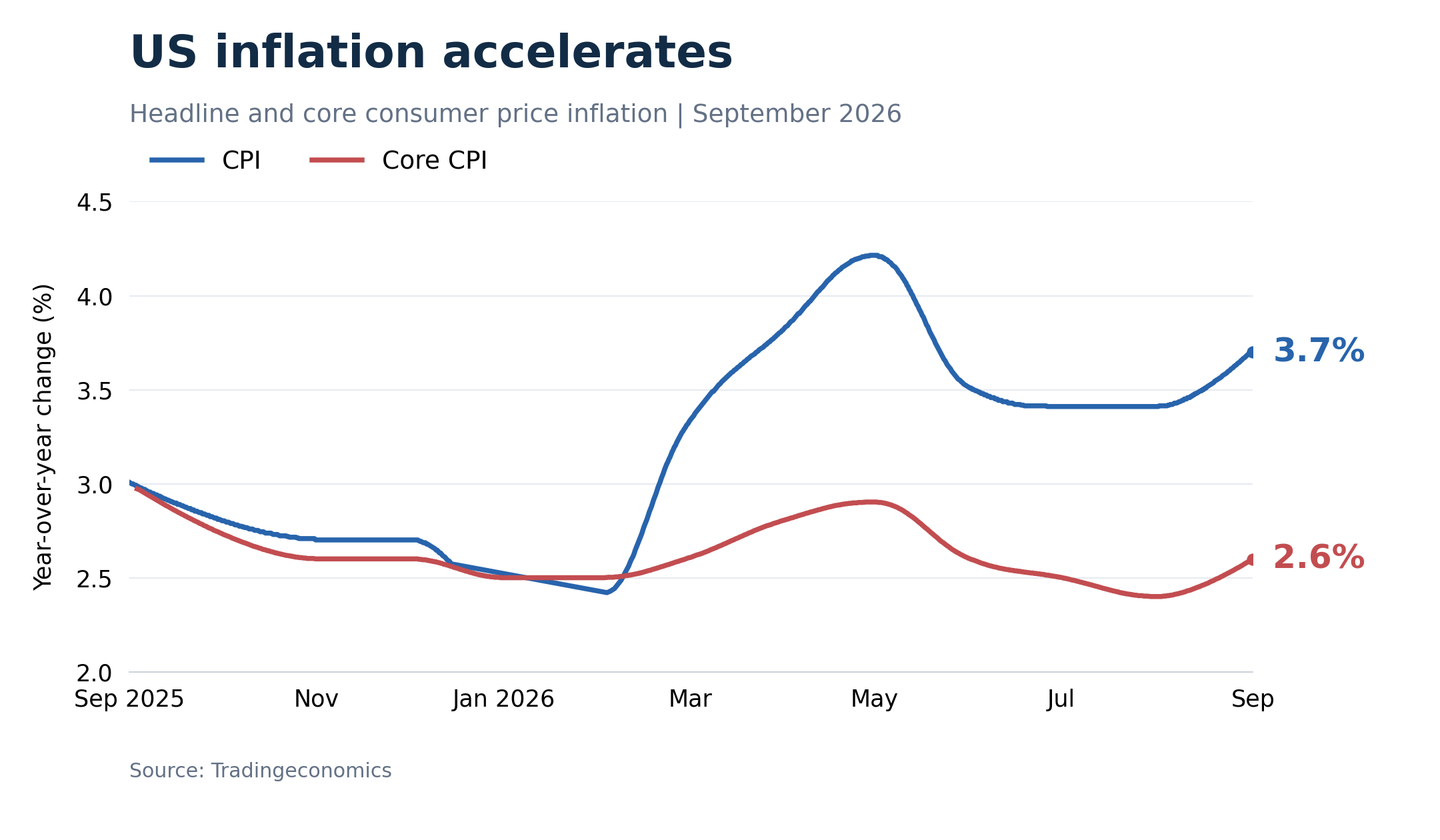
September’s US data showed that price pressures extend beyond rising energy costs. Core CPI inflation exceeded forecasts, with its annual rate increasing by 0.2 percentage points to 2.6%. Having stood at 2.5% at the beginning of the year, it shows little evidence of sustained progress towards lower inflation.
The Fed’s preferred inflation measure, the personal consumption expenditures price index, paints a similar picture. Core PCE inflation remains close to its level at the start of the year, at 3%, above the corresponding CPI measure.
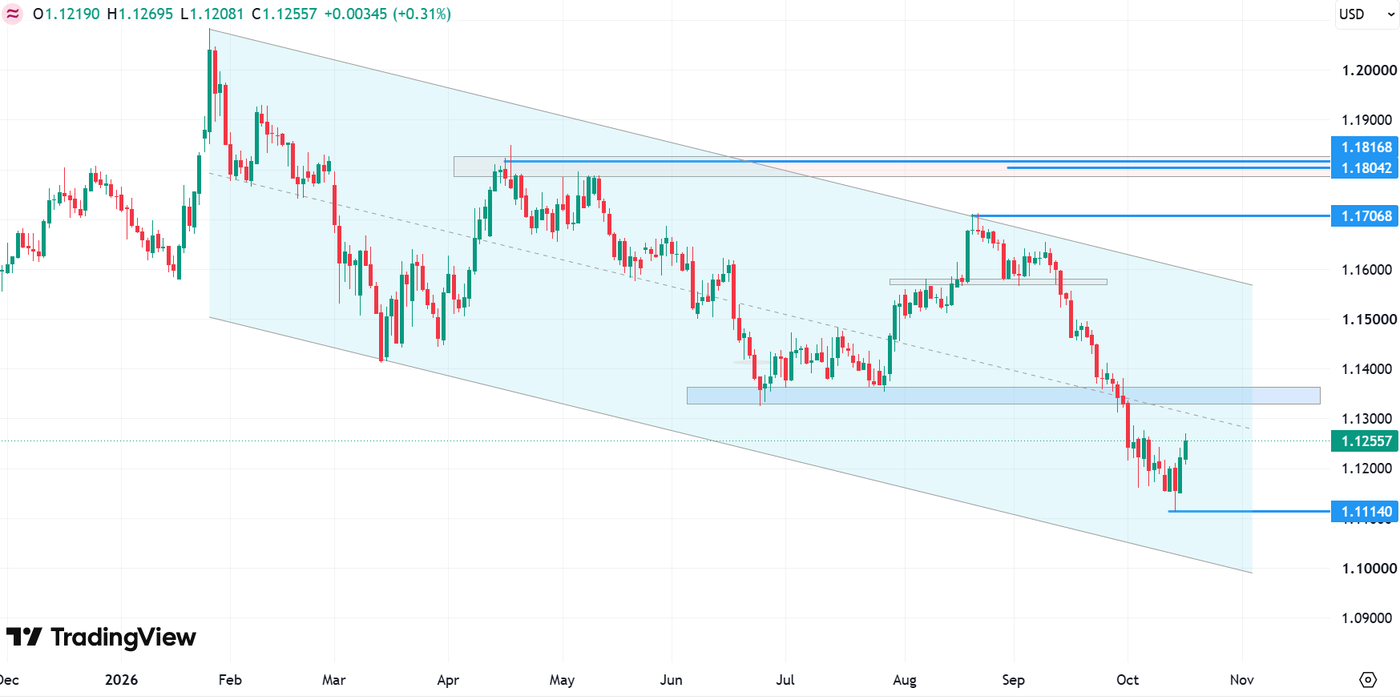
The dollar initially strengthened following the release of the latest inflation data, pushing EUR/USD close to 1.11. The pair subsequently rebounded sharply, moving back above 1.12. Such a swift reversal of the dollar’s gains may suggest that future rate hikes are already largely priced in. It could also signal scope for an upward correction in EUR/USD in the near term, particularly as no meaningful technical rebound has emerged since the latest downward move began.
Fed likely to wait until December
For the Federal Reserve, the inflation trend is crucial, and it still offers insufficient grounds to end the tightening cycle. Kevin Warsh emphasises that decisions should reflect the broader economic picture rather than individual data releases.
However, core inflation holding at elevated levels suggests that the tightening delivered so far may be insufficient to restore price stability. A late October increase, shortly before the congressional elections, appears less likely, while December looks like the more probable window for another move.
ECB officials signal further tightening
Increasingly hawkish signals are also emerging from the European Central Bank’s policy debate. Former Dutch central bank governor Klaas Knot argues that economic and geopolitical changes may require a moderate tightening bias.
Pierre Wunsch believes another rate increase will probably be necessary. Gediminas Simkus has expressed a similar view, saying that the case for a more restrictive monetary policy stance has strengthened since September.
Simkus highlights the importance of the December meeting, when policymakers will have a broader set of data available, while also stressing the relevance of the October meeting. These comments reinforce expectations of one more ECB rate increase this year, most likely in December.
Relative policy expectations matter for EUR/USD
With rate increases potentially approaching on both sides of the Atlantic, hawkish Fed rhetoric alone may not give the dollar a lasting advantage. What matters more is which central bank signals a need for greater cumulative tightening.
If expectations for the Fed and the ECB move in the same direction, the impact of monetary policy on EUR/USD could remain limited.
Opinions are the authors'; not necessarily that of OANDA Business Information & Services, Inc. or any of its affiliates, subsidiaries, officers or directors. The provided publication is for informational and educational purposes only.
If you would like to reproduce or redistribute any of the content found on MarketPulse, an award winning forex, commodities and global indices analysis and news site service produced by OANDA Business Information & Services, Inc., please refer to the MarketPulse Terms of Use.
Visit https://www.marketpulse.com/ to find out more about the beat of the global markets.
© 2026 OANDA Business Information & Services Inc.