










Fed is moving closer to a september rate hike
- A September Fed rate hike is increasingly likely, with market-implied odds rising above 85% after stronger-than-expected core inflation data.
- Inflation risks remain elevated, driven by persistent price pressures, higher oil prices, strong economic growth and rising consumer inflation expectations.
- Further rate hikes may follow, while tighter monetary policy could also intensify political tensions between the Federal Reserve and Donald Trump.
The Federal Reserve is facing growing pressure to raise interest rates at its September 15–16 meeting. The latest U.S. inflation data came in above expectations, while the American economy remains strong enough to leave the Fed with increasingly fewer arguments for keeping rates at their current level.

Core CPI rose 0.3% month over month in August, exceeding economists’ forecasts. The data confirmed that despite more than five years of efforts to bring price growth under control, inflationary pressures in the United States remain elevated. Of particular concern to the Fed is the lack of sufficiently clear progress toward its 2% inflation target.
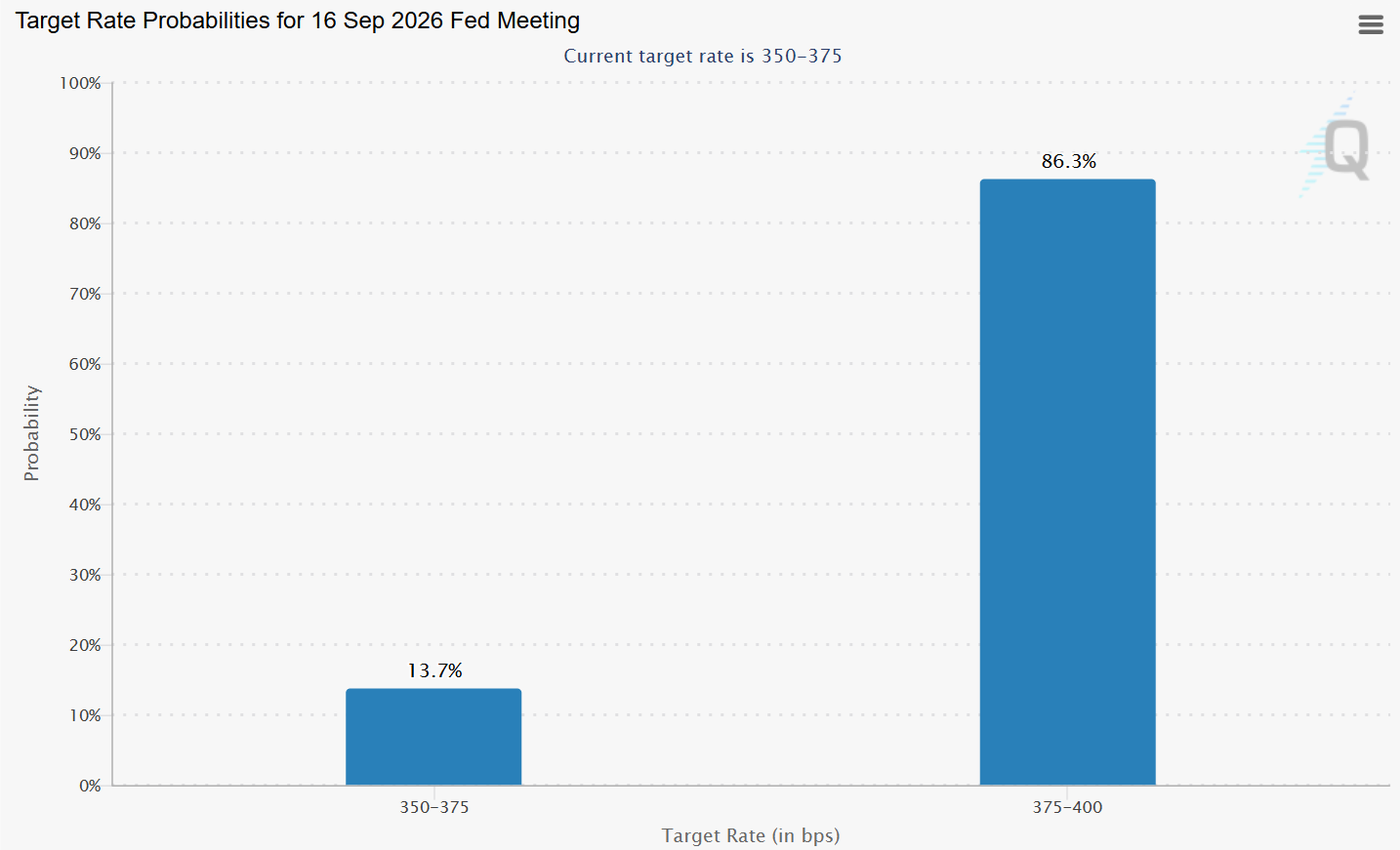
The market reaction was swift. The probability of a rate hike at the September meeting rose from around 70% to more than 85%. Investors also began assigning a greater probability to a second increase by December. Following the release of the data, economists at institutions including TD Bank and JPMorgan revised their forecasts, pointing to a higher likelihood of monetary policy tightening.
Brent crude increase rite hike probability
A record increase in wireless phone service prices accounted for a significant share of August’s rise in core inflation. This suggests that part of the acceleration may have been driven by a one-off factor. However, the Fed must also consider other sources of price pressure that could prove far more persistent.
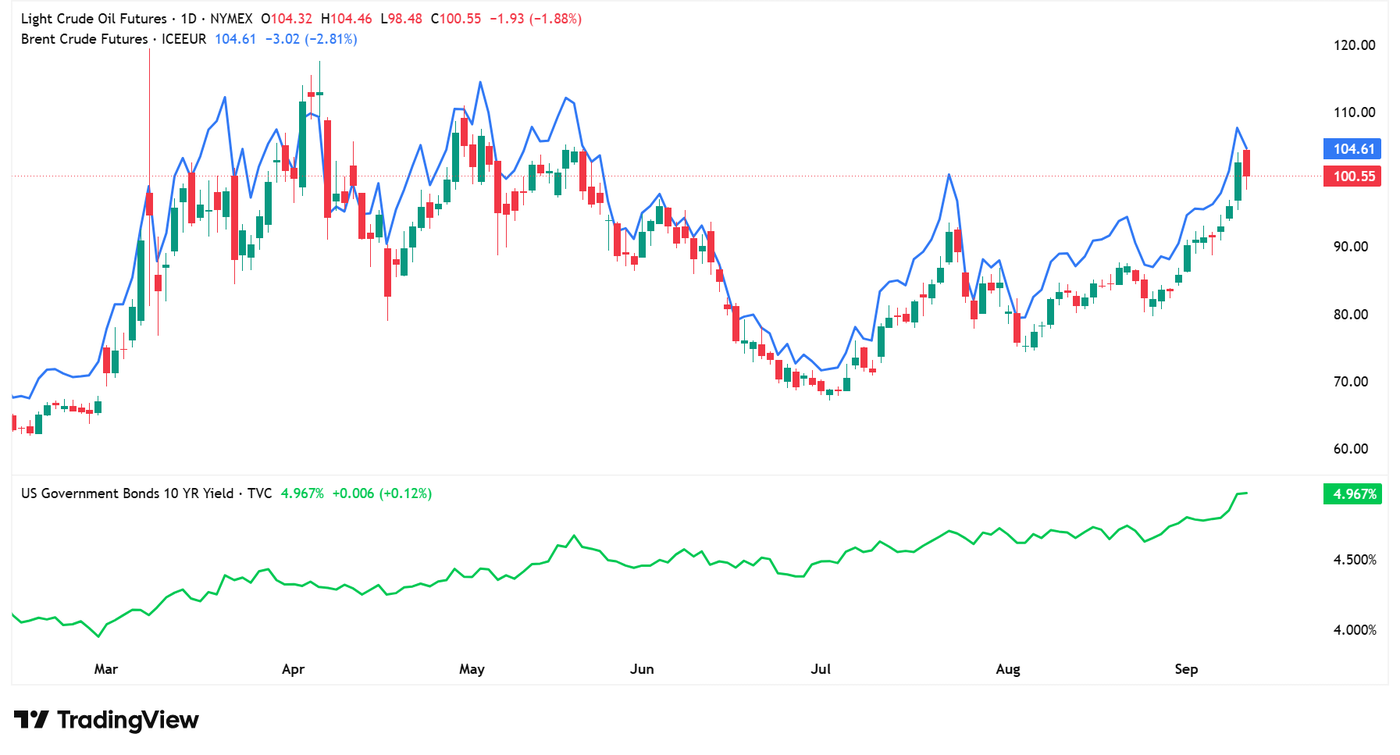
One of them is rising oil prices. Brent crude climbed as high as $109 a barrel on Thursday. More expensive energy could gradually feed into transportation and production costs and, ultimately, into the prices of other goods and services. Strong demand in the economy, partly driven by the rapid expansion of data center infrastructure, is another factor sustaining inflationary pressure.
A rate hike has also become more likely because of earlier comments from Fed Chair Kevin Warsh. He has stressed that core inflation has not improved sufficiently and that the central bank will have to act unless convincing evidence emerges that inflation is moving sustainably back toward the 2% target. Against that backdrop, leaving rates unchanged could be seen as inconsistent with his earlier statements.
Some economists therefore believe that the September meeting is about more than just the level of interest rates. The credibility of the Fed chair may also be at stake. Bloomberg Economics says the market is now clearly expecting a rate hike and that failing to deliver one could weaken Warsh’s position.
Inflation and higher oil prices increase pressure on the Fed
Support for higher interest rates had been growing within the Federal Reserve even before the latest inflation figures were released. The central bank has left rates unchanged at five meetings this year, but in July three members voted in favor of a 25-basis-point increase. Two other Fed officials who did not have voting rights at the time expressed a similar view.
The strength of the U.S. economy also supports the case for tighter monetary policy. Unemployment remains low and stable, while some Fed officials are beginning to conclude that the current level of interest rates is restraining demand less than previously assumed.
If that assessment proves correct, the central bank could decide that at least some of the rate cuts implemented in 2025 need to be reversed. The Fed lowered rates by a total of 75 basis points that year. With economic growth remaining strong and inflation elevated, current borrowing costs may be too low to curb price pressures effectively.

Consumer surveys are also sending worrying signals. According to the University of Michigan, consumers’ one-year inflation expectations rose to 4.6% in September from 4.0% a month earlier. Moreover, for the first time since 2023, a majority of respondents expect interest rates to rise over the next year.
Rising inflation expectations are particularly important for the Fed. If households and businesses begin to assume that high inflation will persist for longer, those expectations could influence decisions on wages, prices and spending. That, in turn, would make returning inflation to the Fed’s target even more difficult.
Markets are pricing in further rate hikes
A growing number of economists believe that a potential September move may not be the final rate hike of the year. Markets have also started pricing in the possibility of another increase before year-end. The main argument is the strength of the economy, which could expand this quarter at a pace well above its long-term trend.
Such strong growth combined with low unemployment increases the risk that demand will remain too robust for inflation to return quickly to 2%. If oil prices also remain high, the Fed could find itself forced to tighten monetary policy more aggressively.
The conflict in Iran remains another significant source of uncertainty. Its impact on the oil market could add to inflationary pressures in the U.S. economy. If higher energy costs prove persistent and begin feeding through to other categories of prices, the case for further rate hikes will become even stronger.
The Fed’s decision could intensify its conflict with Donald Trump
Tighter monetary policy would have political as well as economic consequences. Donald Trump has been calling for lower interest rates, meaning that a rate hike would likely further increase tensions between the White House and the Federal Reserve.
The Fed therefore finds itself in an increasingly difficult position. On the one hand, it must respond to persistent inflation, rising inflation expectations, high oil prices and a strong economy. On the other, higher interest rates mean increased borrowing costs for households and businesses and could trigger another wave of political pressure on the central bank.
The latest data have nevertheless shifted the balance of arguments clearly toward tighter monetary policy. Until recently, the main question was whether the Fed would raise rates in September. Increasingly, the more important question is whether a September move would be a one-off adjustment or the beginning of a longer tightening cycle that reverses some—or even all—of the rate cuts implemented in 2025.
Opinions are the authors'; not necessarily that of OANDA Business Information & Services, Inc. or any of its affiliates, subsidiaries, officers or directors. The provided publication is for informational and educational purposes only.
If you would like to reproduce or redistribute any of the content found on MarketPulse, an award winning forex, commodities and global indices analysis and news site service produced by OANDA Business Information & Services, Inc., please refer to the MarketPulse Terms of Use.
Visit https://www.marketpulse.com/ to find out more about the beat of the global markets.
© 2026 OANDA Business Information & Services Inc.